Whether you’re making your first crypto trade or testing a new strategy, Bybit Demo Trading lets you practice and learn without risking your real money.
The last thing you want is to lose real money because you clicked the wrong button, picked the wrong order type, or tried an unproven strategy. Practicing first gives you the freedom to make mistakes and learn from them.
In this guide, you’ll learn how to access Bybit Demo Trading, make your first demo trade, avoid common mistakes, and know when you’re ready to start live trading.
What Is Bybit Demo Trading?
Bybit Demo Trading is a simulated version of the live trading platform that lets you practice with virtual funds instead of risking real money.
Although you trade with virtual funds, Bybit Demo Trading uses real crypto market prices, so you can see how the platform works in real market conditions. You can place trades, use different order types, practice spot and futures trading, and test trading strategies without worrying about losing real money.
Bybit Demo Trading is ideal for complete beginners learning how to trade crypto and experienced traders who want to test new strategies before going live.
Keep in mind that demo trading profits don’t guarantee live trading profits because real trading involves emotions that can influence how you trade.
Step by Step: How to Use Bybit Demo Trading
Follow the steps below to access Bybit Demo Trading and place your first practice trade with confidence.
Step 1: Create or Log Into Bybit
Follow this guide inside your Bybit account so you can practice each step as you go. If you don’t have a Bybit account yet, create one now. It only takes a few minutes and gives you immediate access to Demo Trading.
Step 2: Switch to Demo Trading
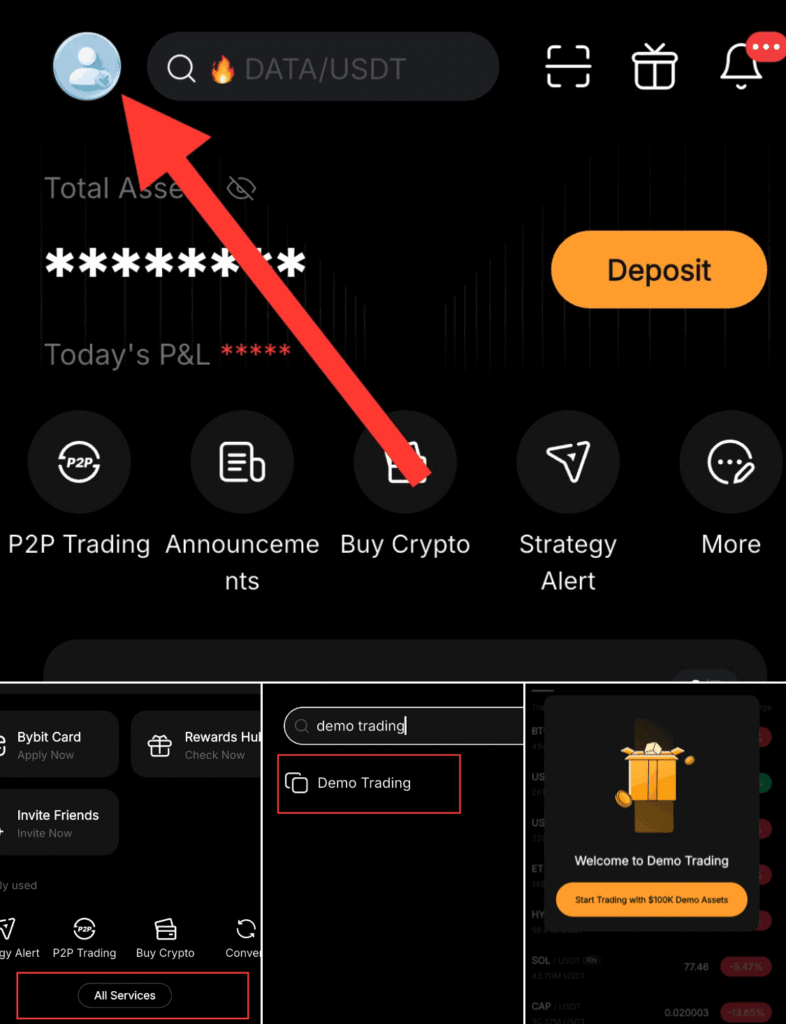
Click your Profile Icon, select All Services, then search for Demo Trading and open it. Once it opens, you’ll usually see a demo balance of around $100,000. These are virtual funds, not real money. You can use them to practice safely before you start trading with real money.
Step 3: Choose Spot or Futures
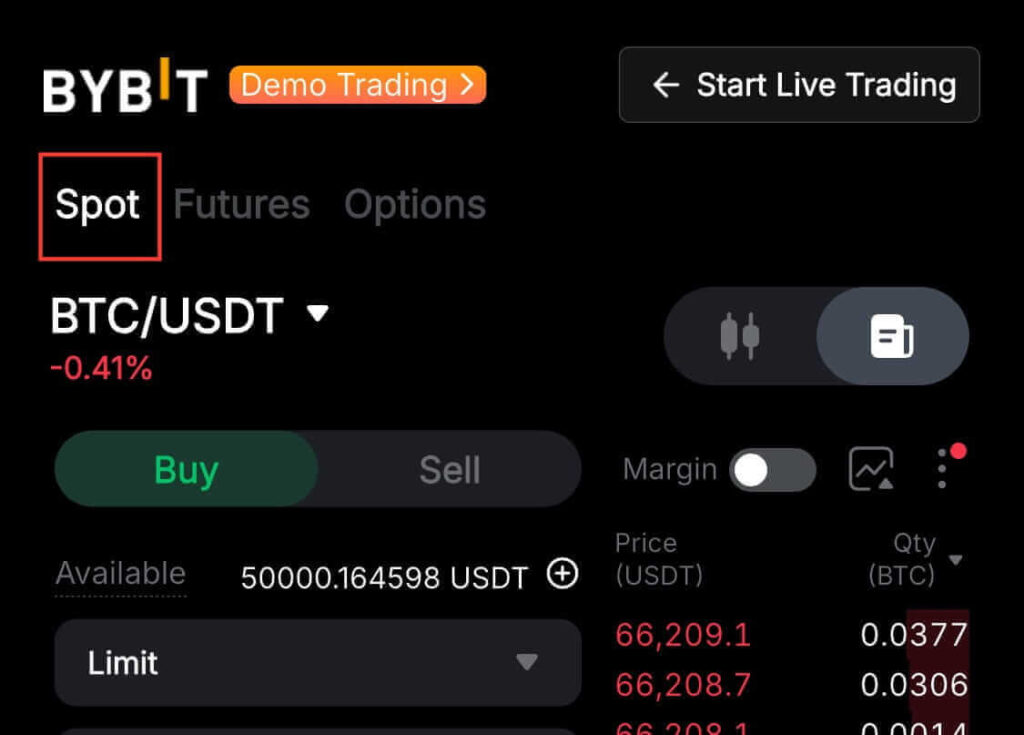
Choose Spot if you want to practice buying and selling cryptocurrencies directly. Pick Futures if you want to learn how leverage works and practice long and short positions. If you’re new to crypto trading, start with Spot since it’s easier to understand.
Note: Futures Demo Trading also lets you practice using stop-loss and take-profit orders. Spot Demo Trading doesn’t support these features in the same way.
Step 4: Select a Trading Pair
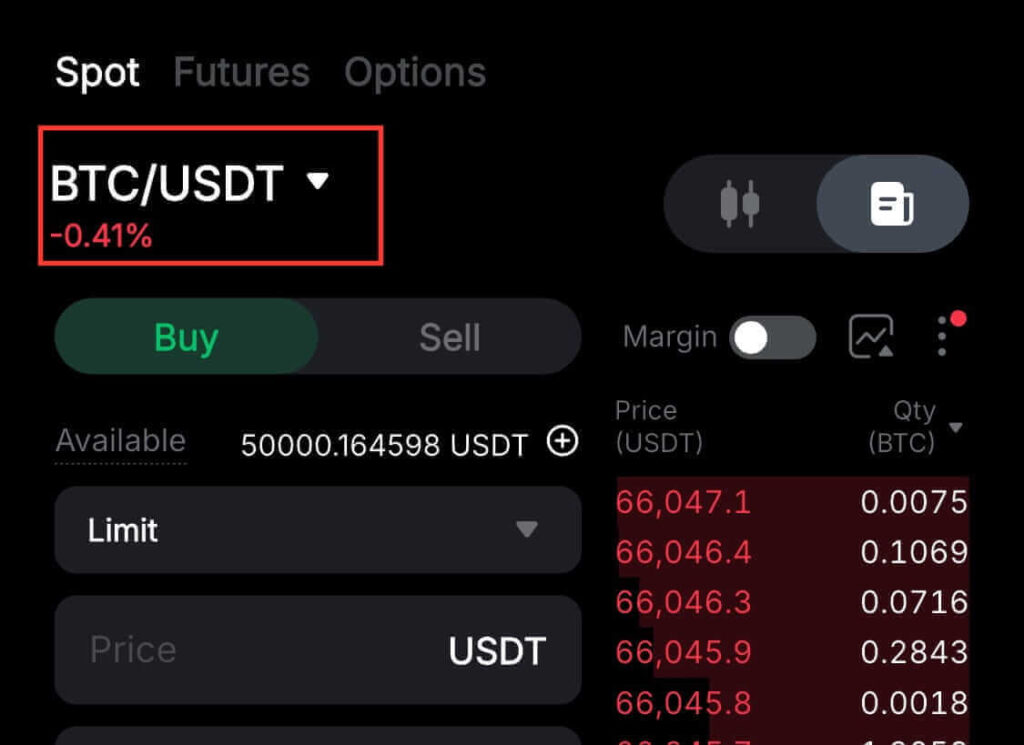
Use the search bar to find a trading pair, such as BTC/USDT or ETH/USDT. The first currency is the crypto you’re buying or selling, and the second is what you’ll use to buy or sell it. BTC/USDT is a good place to start because it’s widely traded and easy to track.
Step 5: Choose Market or Limit Order
Choose a Market Order if you want your trade to execute immediately at the current market price. Pick a Limit Order if you want your trade to execute only when the market reaches the price you set. For your first demo trade on Bybit, use a Market Order because it’s easier to understand.
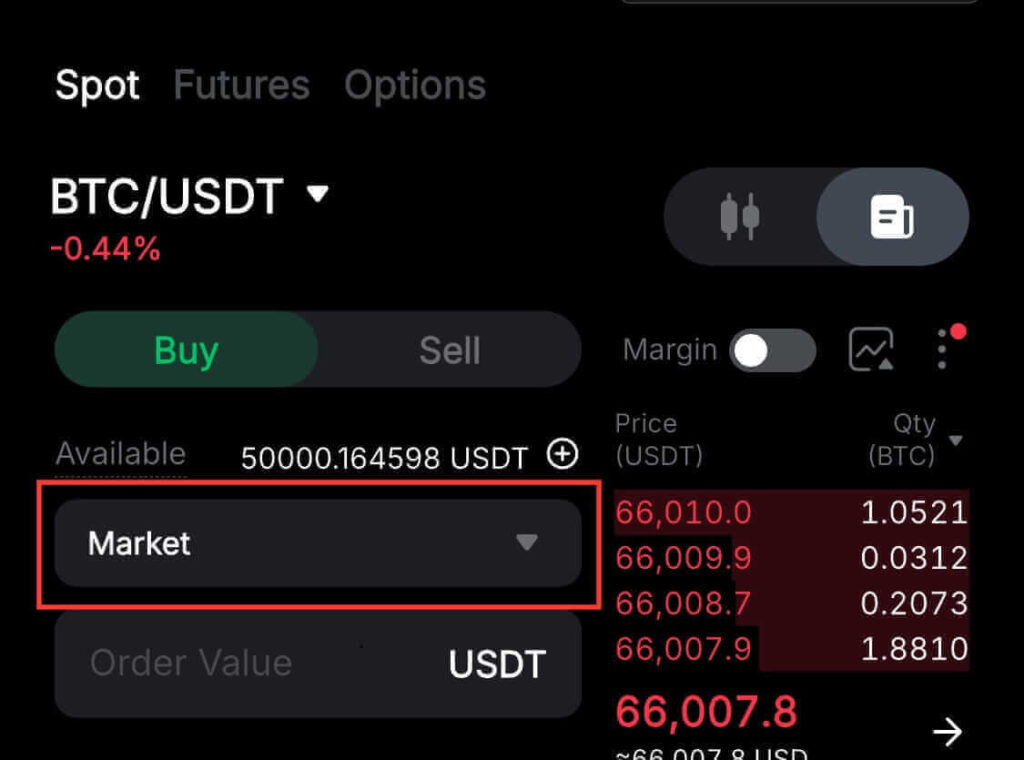
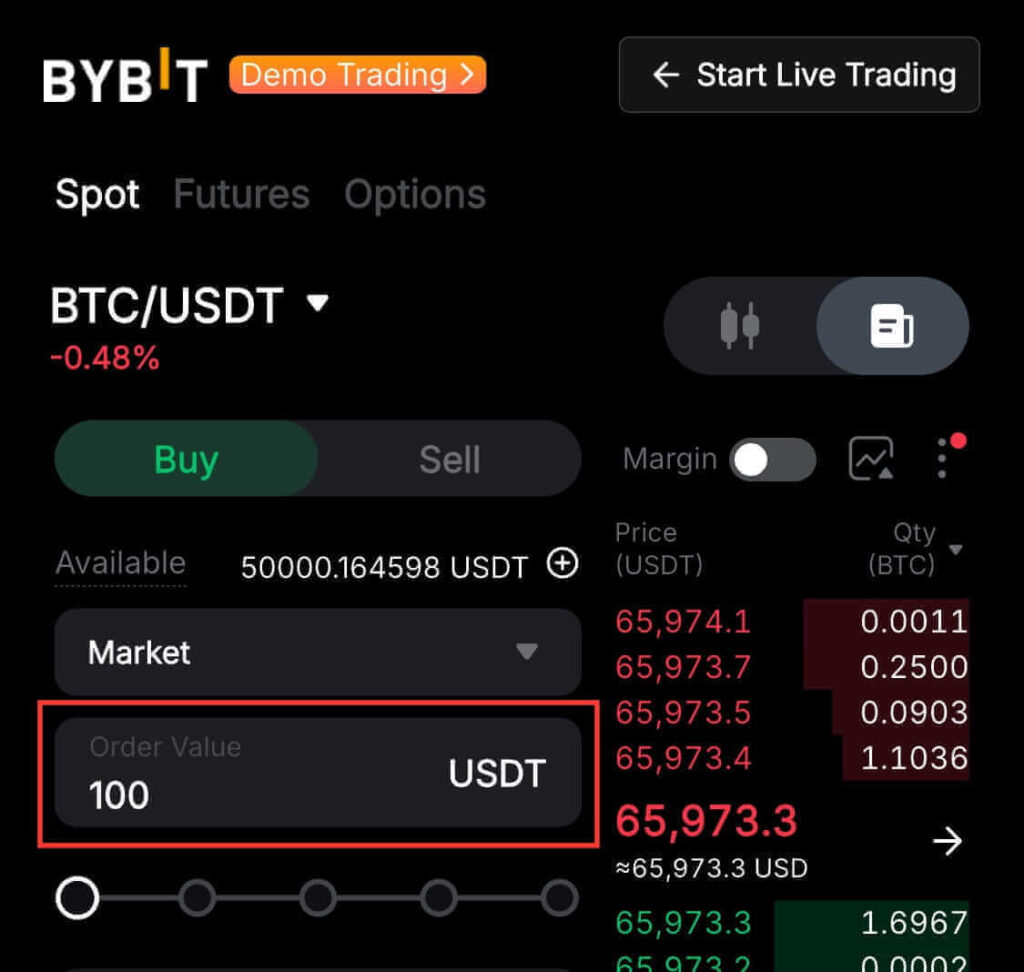
Step 6: Enter Trade Amount
Enter the amount of virtual USDT you want to use, or adjust it with the slider. A good amount to start with is 100 USDT. Focus on learning how to trade instead of chasing virtual profits. The habits you build in demo trading often stick with you when you move to live trading.
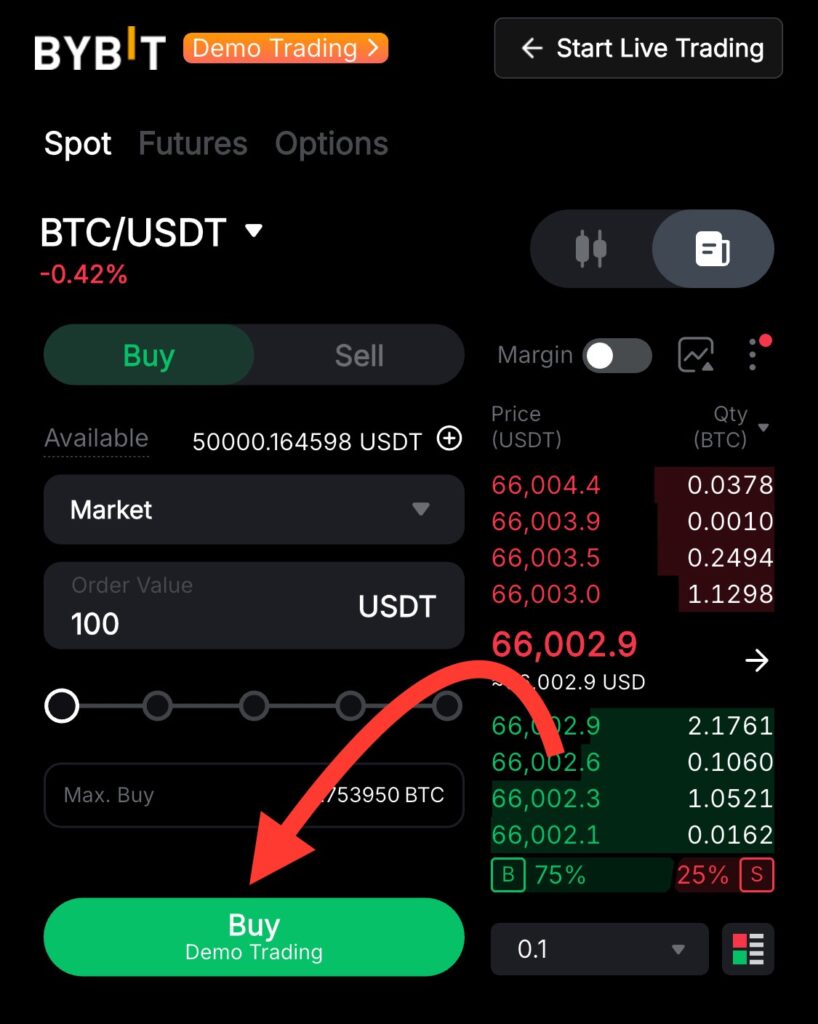
Step 7: Place the Trade
Review your order carefully before you submit it. This simple habit can help prevent expensive mistakes when you start trading with real money. For Spot, click Buy or Sell. For Futures, click Long or Short. Once you place your order, you’ll see a confirmation message.
Step 8: Monitor the Trade
Watch how the price changes, then close your position whenever you’re ready. The goal isn’t to make virtual profits but to learn from every trade so you can make better trading decisions.
After each trade, I spend about a minute reviewing what I did right and what I could improve. I use a simple checklist before every trade to help me avoid mistakes. If you’d like a copy, get my free 60-Second Crypto Pre-Trade Checklist.
Common Beginner Mistakes When Using Bybit Demo Trading
Bybit Demo Trading is most effective when you treat it like real trading. The mistakes below are why many beginners feel confident in demo mode but struggle when they switch to live trading.
1. Treating Demo Money Like Monopoly
Many beginners place random trades or chase virtual gains because the money isn’t real. Sadly, those habits often carry over into live trading. So treat every demo trade as if your own money were on the line. The habits you build now are the habits you’ll carry into live trading. Many of these bad habits also explain why most crypto traders lose money.
2. Ignoring Risk Management
Many beginners focus so much on winning trades that they overlook risk management. One losing trade should never be able to wipe out weeks or months of profits. Start by using proper position sizes, setting a stop-loss when trading futures, and planning your exit before entering a trade. Good risk management makes live trading much easier.
3. Jumping Into Live Trading Too Quickly
It’s tempting to switch to live trading after a few winning trades, but confidence alone isn’t enough. Real crypto trading comes with emotions that demo trading can’t fully match. So only make the switch after you’ve consistently followed the same strategy and risk management plan across multiple demo sessions.
Demo Trading vs Live Trading on Bybit
| Feature | Demo Trading | Live Trading |
|---|---|---|
| Money Used | Virtual funds | Real money |
| Risk | None | Real loss |
| Emotions | Lower | Higher |
| Best For | Learning and practising | Real investing and trading |
While demo trading is the safest place to learn, there are still important lessons you won’t learn until real money is involved.
What Bybit Demo Trading Cannot Teach You
Even if you use Bybit Demo Trading correctly, there are still some important things it can’t fully prepare you for.
1. Real Emotions
Bybit Demo Trading can help you learn how to trade crypto and stick to a strategy, but it can’t fully prepare you to handle emotions like fear, greed, and FOMO. Those emotions usually don’t appear until your own money is on the line. That’s why it’s important to use demo trading to build good trading habits first, then learn to manage your emotions once you start trading with real money.
2. Handling Real Financial Pressure
Watching your demo balance go up or down feels very different from watching your own money do the same. Trading with real money can make you hesitate, panic, or give up on your plan. That’s why experienced traders often recommend starting with small amounts of real money until your discipline is stronger than your emotions.
Using Bybit Demo Trading is only the first step. If you’d like personalized help preparing for the emotional and practical side of live trading, book a free 30-minute crypto coaching session.
When Should You Switch from Bybit Demo to Live Trading?
Moving from Bybit demo trading to live trading is a big step. Here are some signs that you’re ready to risk real money.
1. You’re Consistently Profitable in Demo Trading
A few winning trades don’t mean you’re ready. Instead, look for steady profits across several demo trading sessions using the same strategy. To measure your progress, keep a trading journal to track your results. After all, consistency matters far more than a few lucky trades.
2. You Follow a Trading Plan Consistently
A good trading plan tells you when to enter, when to exit, how much to risk, and which setups to trade. Before you start trading with real money, make sure you can stick to your plan instead of taking random trades or letting your emotions take over.
3. You Can Manage Risk Without Breaking Your Rules
Being ready means protecting your capital, not just making profits. That starts with keeping your position sizes consistent, using stop-loss orders when trading futures, and avoiding revenge trading after a loss. If you can stick to your risk management rules every time, you’re much better prepared for live trading.
If you still have doubts about your strategy or risk management, getting feedback before you start live trading can help you avoid costly beginner mistakes.
What to Do After Practicing on Bybit Demo Trading
How you transition from Bybit Demo Trading to live trading can make all the difference. Here’s how to do it the right way.
Start with Small Amounts
Your first live trades should be about learning how you react when real money is involved, not making huge profits. That’s why you should start with small trades and avoid going all in. It gives you time to build confidence while protecting your trading capital.
Trade with the Same Rules You Used in Demo
Don’t change a strategy that’s already working. Instead, keep using the same entry and exit rules, stop-loss settings, and risk limits that gave you consistent results in demo trading. The only thing that should change is that you’re now trading with real money.
Keep Learning Before Increasing Your Risk
A few winning trades don’t mean it’s time to start placing bigger trades. So keep reviewing your trades, learning from mistakes, and improving your strategy. Only increase your risk after your results and discipline stay consistent over time.
Taking this approach can help you avoid unnecessary losses and build a stronger foundation to become a consistently profitable trader.
Conclusion
The real purpose of Bybit Demo Trading isn’t to make virtual profits. It’s to build the habits you’ll rely on when real money is at stake.
That’s why you should practice until following your trading plan becomes routine, not something you have to think about.
If you haven’t started yet, create your Bybit account and start using Demo Trading today.
For extra guidance, you can also book a free 30-minute crypto coaching session. See you!
FAQs
Additional Resources:
- Crypto Spot Trading vs Margin vs Futures (Know the Difference)
- How to Create and Verify a Bybit Account
And guess what? We’re also on Instagram and Twitter(X). Join us there for even more fun and useful content!
DISCLAIMER:
The information provided herein is for educational purposes only and should not be relied upon as the sole basis for making investment decisions. Additionally, I strongly recommend investing only money that you can afford to lose when purchasing or trading cryptocurrencies.